
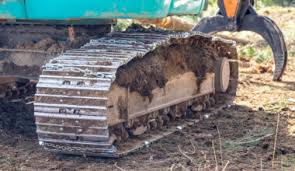
As an excavator operator or owner, properly maintaining your excavator tracks is important for ensuring they offer their services for a long period and at very optimal performance. Regular checks and repairs should be part and parcel of your daily activities. Let us learn a few tricks on how to properly care for your excavator tracks and how excavator tracks improve traction
Five tips for maintaining your excavator tracks
Regular inspections:
You should not get tired of regularly checking your tracks for any signs of wear or misalignment. The most common issues with excavator tracks involve cuts, cracks and missing trackpads. Such issues should be addressed immediately after they are spotted to prevent further damage that will make the repair cost high and costly.
Proper tensioning:
The excavator’s tracks require correct tensioning as outlined in the manufacturer’s manuals. Over-tensioning of tracks could lead to excessive tear as a result of being tightly held with no allowance for extension and flexibility. On the other hand, under-tensioning the tracks can result in derailment, becoming inefficient and ineffective.
Cleaning and lubrication:
The tracks should be kept clean from mud, debris and any substance that can result in abrasion and further damage. Lubrication involves applying oil in moving parts like rollers and idlers to minimise friction.
Rotation and replacement of the tracks:
Tracks should be regularly reshuffled to ensure that they wear out evenly. Any worn-out tracks should be replaced promptly to prevent further damaging the underlying components of the carriage. Rotation and replacement ensure that there is stability and high traction power on the vehicle, hence accomplishing tons of work in just a little time.
Proper handling:
You should train your operators to use the machine as it was intended. They should not be involved in behaviours like taking sharp and unnecessary turns, excessive speeds, and operating at extremely rough terrain when not necessary. Observing these operation tips will reduce damage to the tracks and prolong their lifespan.
How excavator tracks improve traction
Wide surface area:
The tracks on the excavator spread the huge weight of the machine to a large area, helping to increase stability and reducing the pressure exerted on the ground. Hence, the machine cannot easily sink even when moving on a light surface.
Continuous contact with the ground:
Excavator tracks are designed to constantly maintain contact with the ground as the vehicle moves around. This provides better control and multiple traction points, especially on uneven terrain.
Robust design:
The tracks are made out of durable and resilient materials, hence capable of providing firm grips to various surfaces effectively. This improves the overall traction and stability of the machine.
Conformity:
Excavator tracks are known for their ability to flex and assume the shape of any surface. As such, there is always consistent and strong contact with the ground. This ability allows it to be deployed in areas where other forms of vehicles cannot access.
Weight distribution:
Since tracks distribute the weight of the vehicle over a large area, soil compaction is greatly reduced and the machine can easily navigate over loose surfaces with ease. This also makes excavators to be excellent solutions in farming activities.
The five main tips for maintaining your tracks involve regular inspections, proper tensioning, cleaning and lubrication, rotation and replacement of the tracks and proper handling. Excavator tracks help to improve traction by offering wide surface area, continuous contact with the ground, robust design, conformity and weight distribution.